
I'm sharing my FAVOURITE low carb burger buns recipe, perfect for any one following a gluten free, keto or low carb diet.
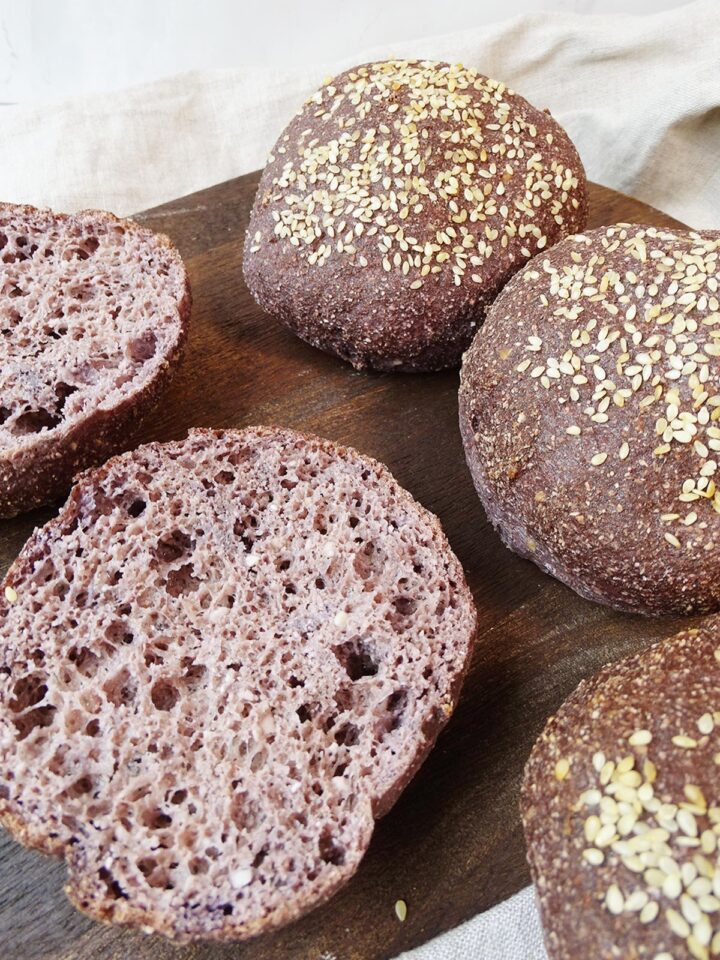
These buns are soft, fluffy, and chewy with the most satisfying bread-like texture - without any gluten, yeast, or sugar. They’re made with wholesome ingredients like almond flour, coconut flour, and psyllium husk, so they’re perfect if you're following a Candida Diet or gut-friendly lifestyle.
This recipe was inspired by the classic Diet Doctor keto bun, but adapted to make it more budget-friendly and lighter.
Note that this low carb burger buns recipe uses eggs, so if you're looking for an egg-free or vegan option be sure to try my gluten and yeast free baguette recipe.
Jump to:
? Why You'll Love These Low Carb Burger Buns
Finding a gluten free bread recipe that actually feels and tastes like bread is no easy feat. These buns solve that problem - they’re nourishing, easy to make, and versatile enough to enjoy in countless ways.
These low carb burger buns are:
- Soft, fluffy and perfectly chewy
- 100% gluten free, yeast free, sugar free and low carb
- Packed with gut-friendly fibre from psyllium husk
- Freezer-friendly and great for meal prep
- A satisfying Candida Diet-friendly bread alternative
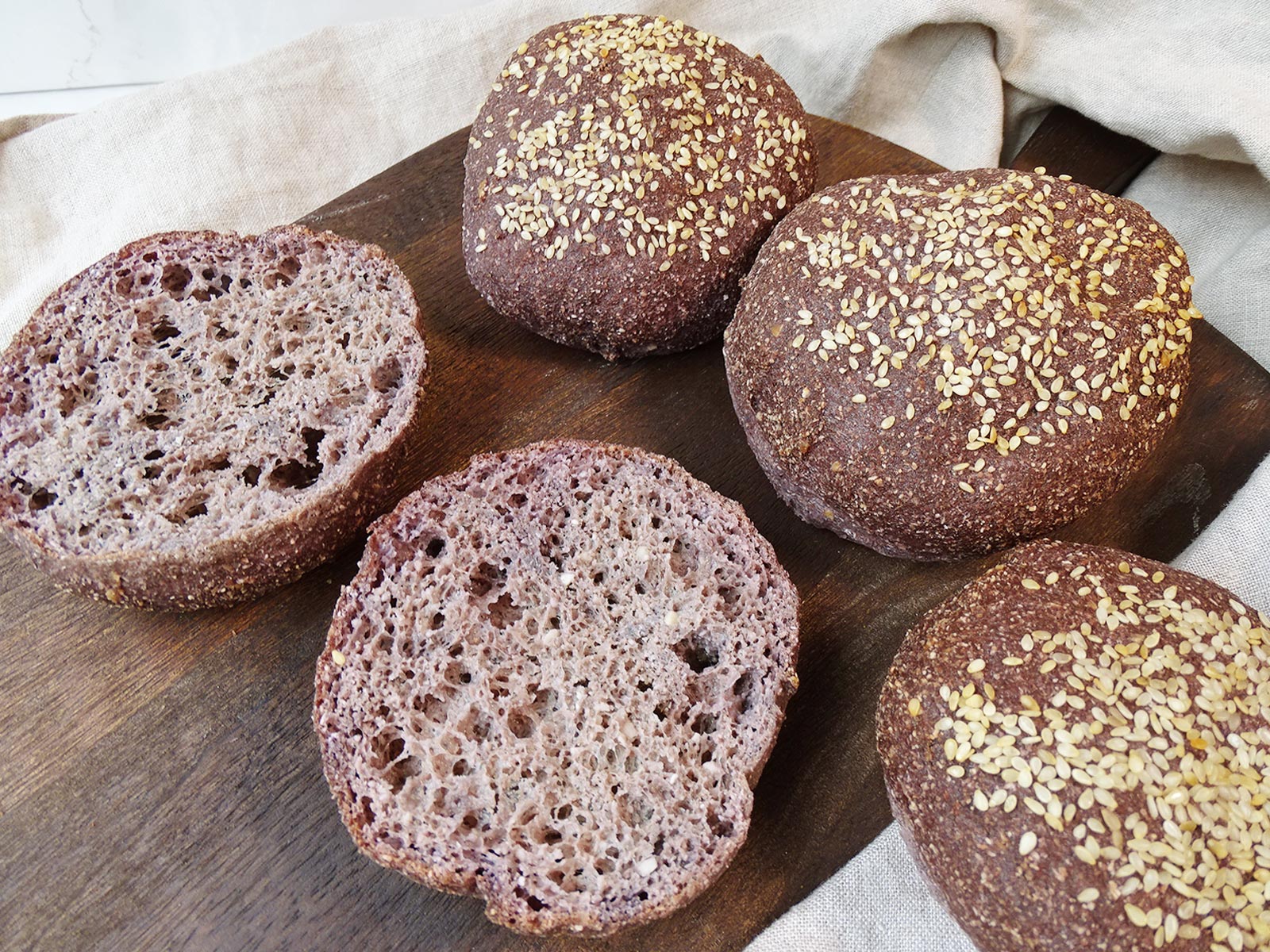
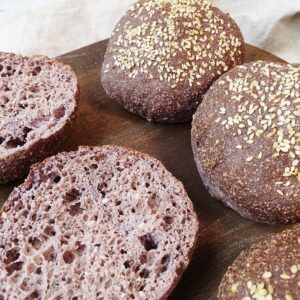
Fresh from the oven they are crisp on the outside, and chewy and soft on the inside.
In fact, simply by shaping these slightly differently, they can easily be transformed into low carb hot dog buns!

? Why Make Your Own Low Carb Burger Buns
Although there are an abundance of gluten free bread options in the shops these days, most if not all still won’t contain the healthiest of ingredients.
In most supermarket free-from loaves you will find yeast, sugars of various forms, potato starch, maize starch, stabilisers, preservatives and flavourings to name a few. And as you’ll know when following an anti-candida diet, avoiding processed ingredients such as these, and sugar and yeast in particular, is an essential aspect of the healing process.
If you make your own bread, however, you will be able to control exactly what is going into your body.
✨ Benefits of Psyllium Husk Powder
Blond psyllium or psyllium husk, is a fibre derived from the seed of the plant Plantago ovata. It is commonly used as both a dietary supplement and binding ingredient in baking.
Psyllium husk is a type of soluble fibre (meaning it dissolves in water). When it comes into contact with water, it forms a gel-like substance. This gel can help to bulk up the stool making it easier to pass. In powder form, the psyllium contains more fibre.
Psyllium husk powder is also a source of prebiotics - nutrients that feed the good bacteria in your gut – this makes psyllium husk an absolute powerhouse for supporting a healthy digestive system.
Health benefits aside, it is also extremely effective at thickening or stabilising food. Making it a popular ingredient in many gluten free baked goods recipes.
In recipes, it is not simply a case of substituting them like for like, however, as you would need less of the powder than the whole husks. This is because the powder is capable of absorbing far more water, so make sure to use the exact type of psyllium specified in the recipe.
If you can only find whole psyllium husks, you can grind these yourself into powdered form using a coffee grinder.
? Ingredients
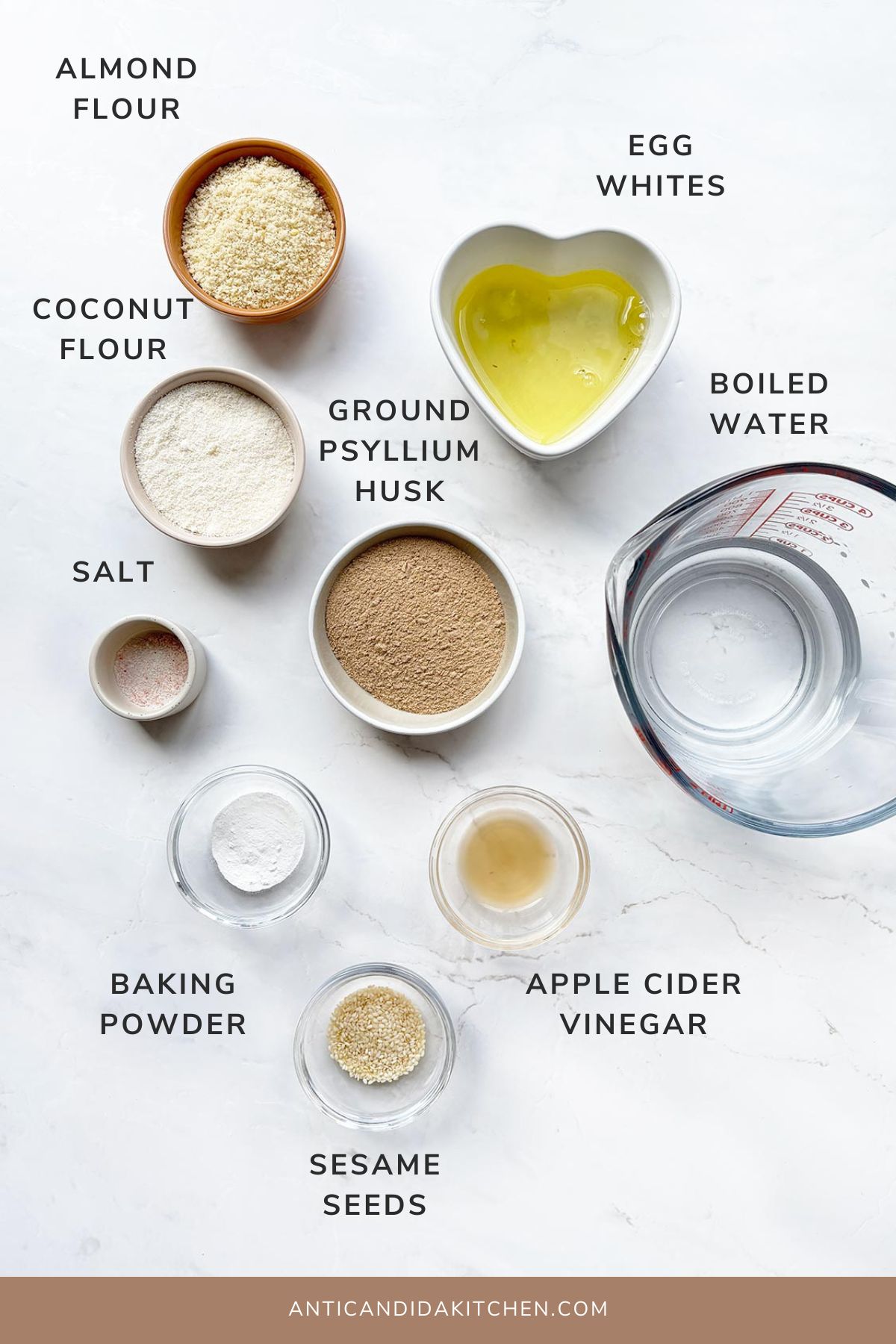
To make these delicious low carb burger buns you will need:
- Almond flour for richness and a mild nutty flavour
- Coconut flour to lighten the texture and provide subtle sweetness
- Psyllium husk powder for structure and fibre
- Egg whites are essential for binding and lift
- Apple cider vinegar to activate the baking powder
- Baking powder to create a light rise
- Salt to enhance flavour
- Pumpkin seeds or sesame seeds (optional) for a rustic topping
? Instructions
1. Preheat your oven to 175°C (347°F).
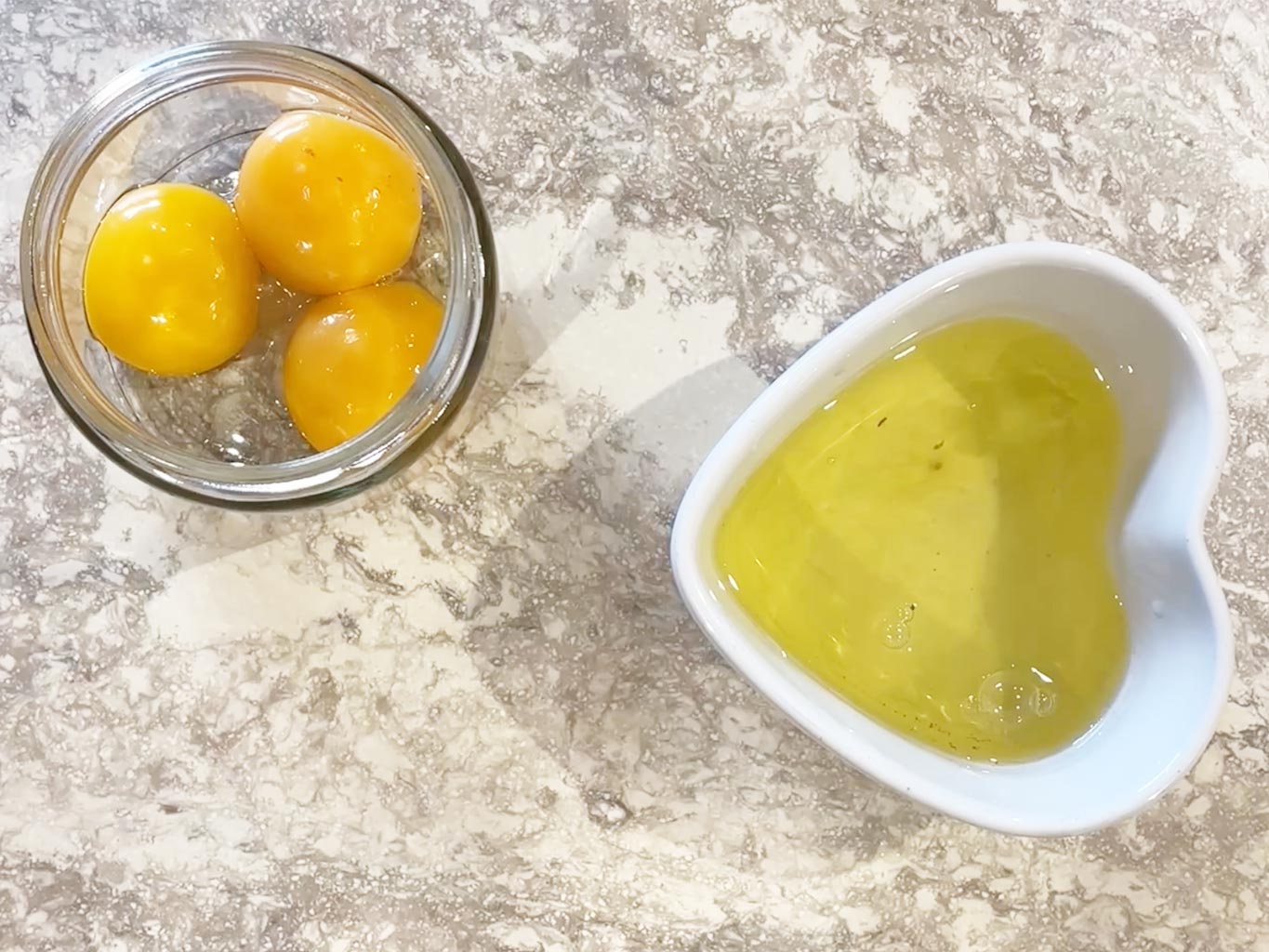
Separate the egg whites and whisk them lightly with the apple cider vinegar.
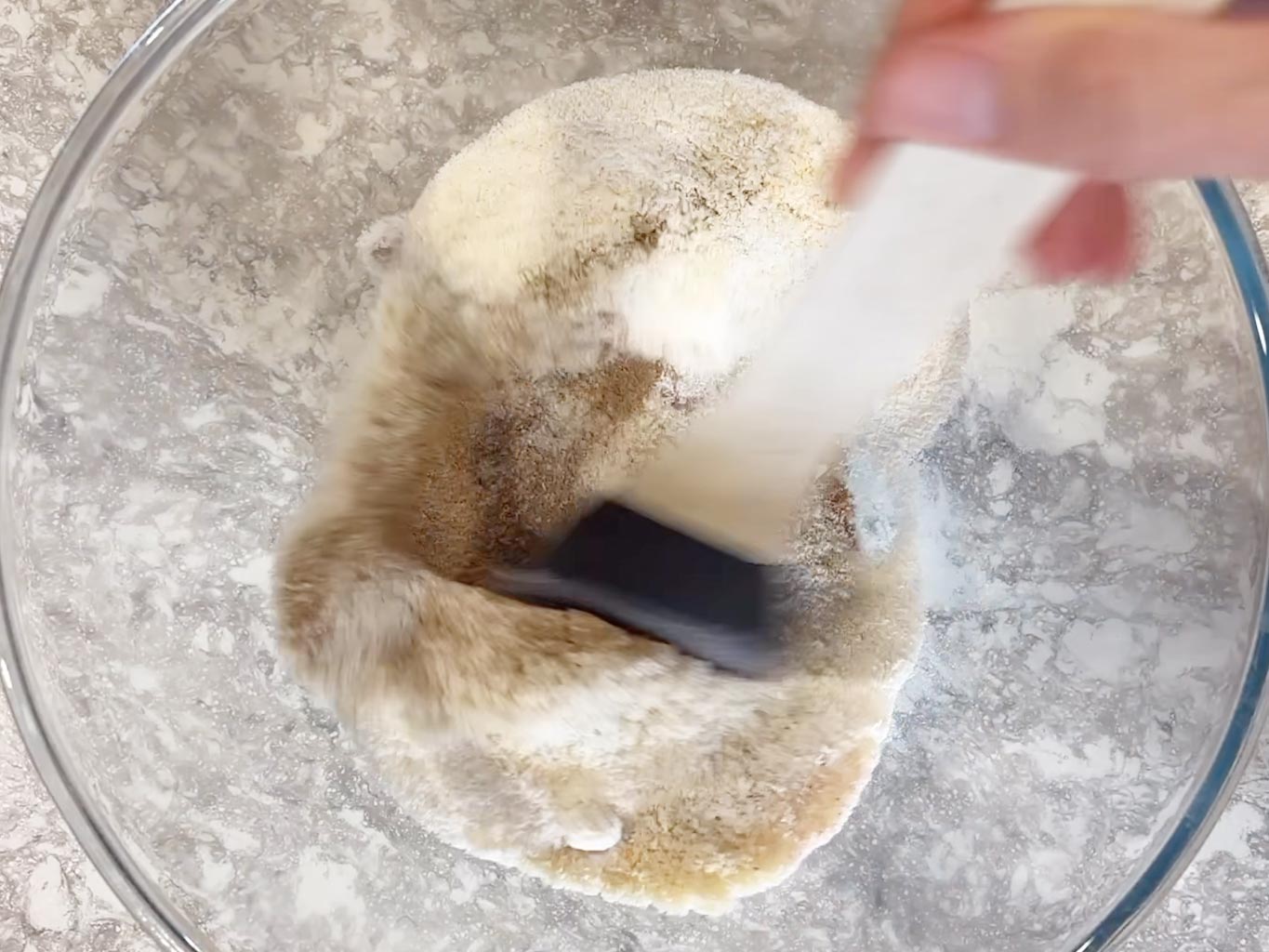
2. In a large bowl, combine almond flour, coconut flour, psyllium husk powder, baking powder, and salt.
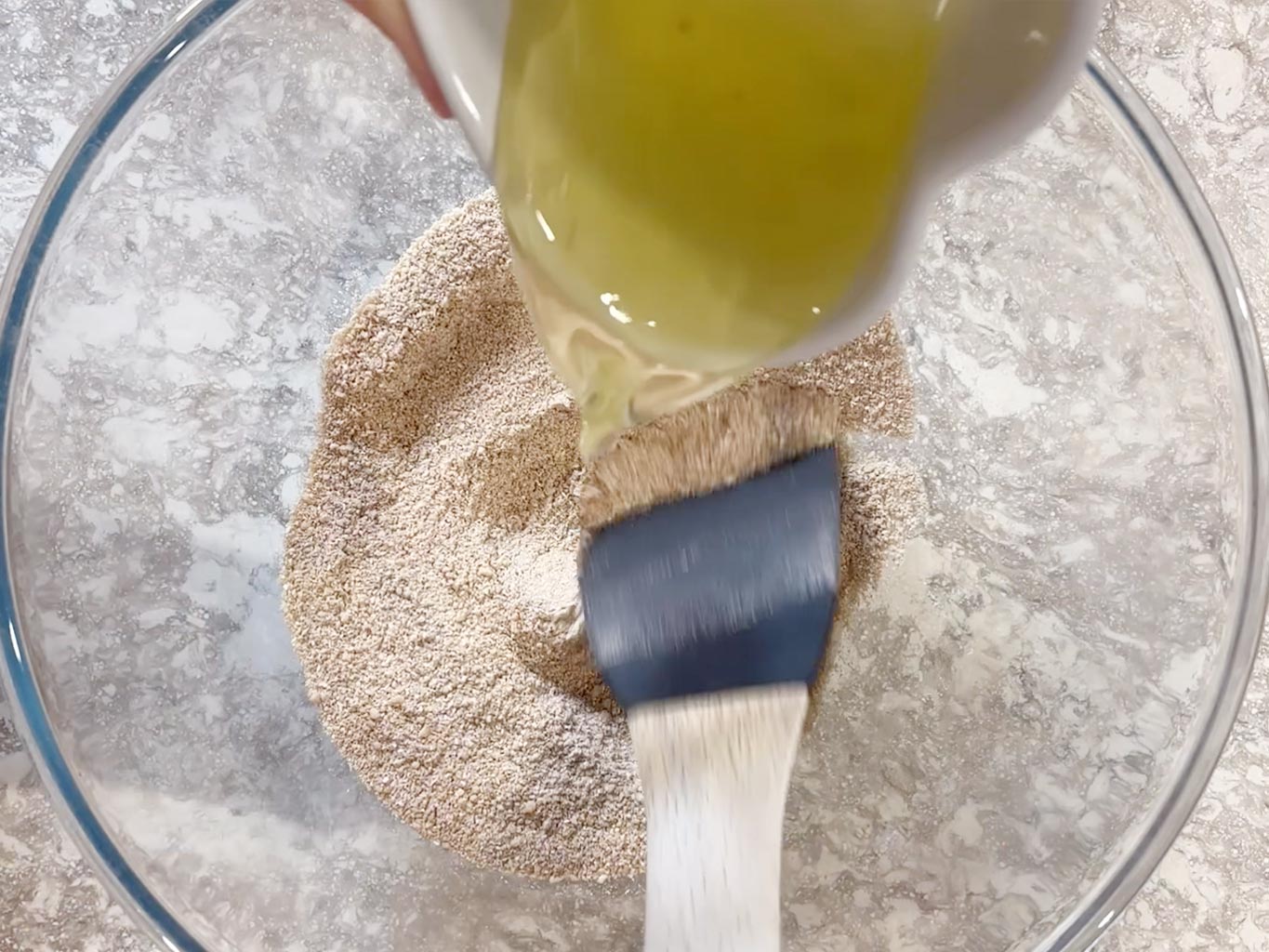
3. Measure out 235 ml freshly boiled water. Add the wet ingredients to the dry mix and combine gently. Next, gradually pour in the hot water while mixing.
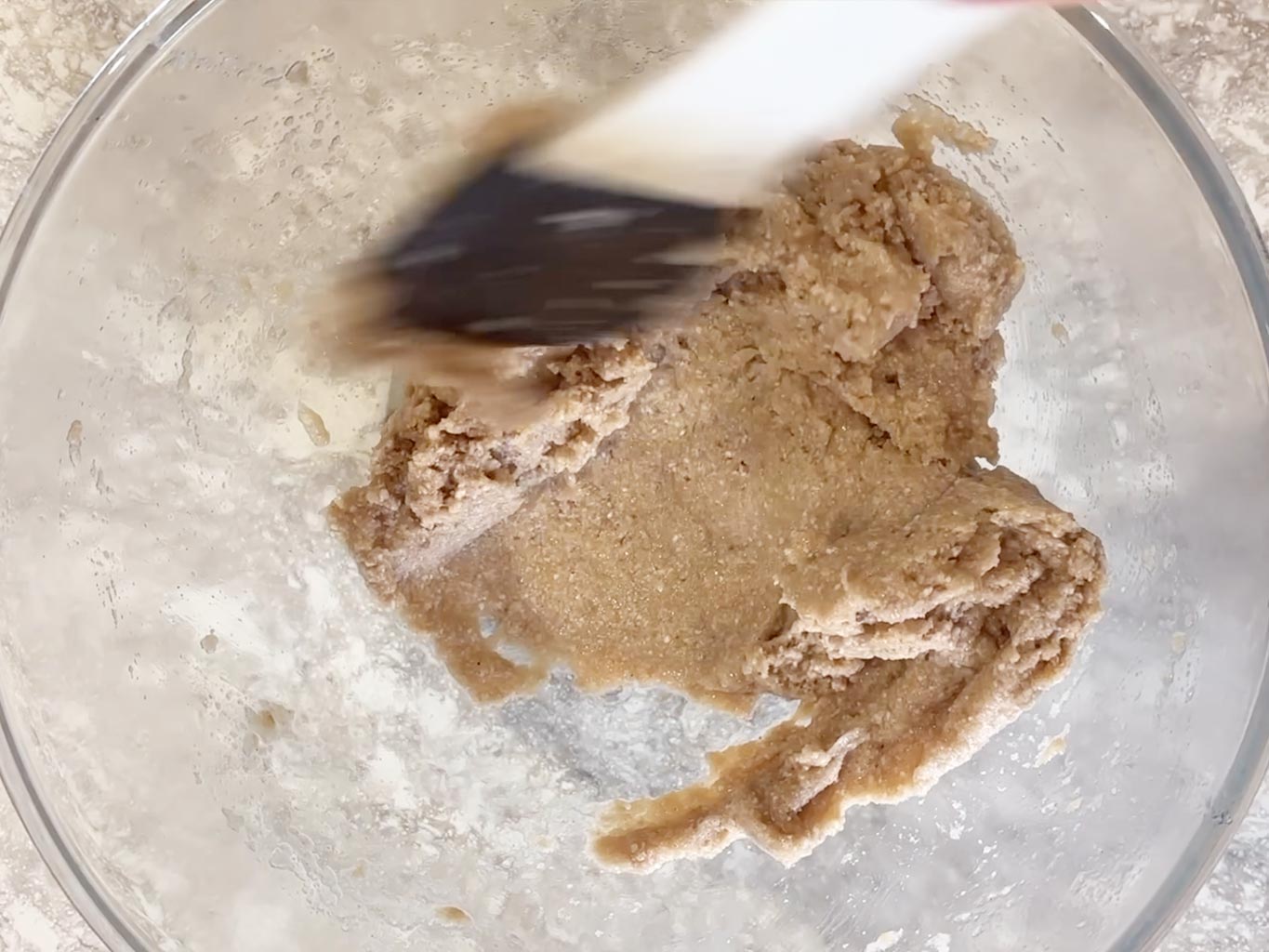
4. Once the dough thickens to a gel-like texture, divide it into 4–6 equal portions.
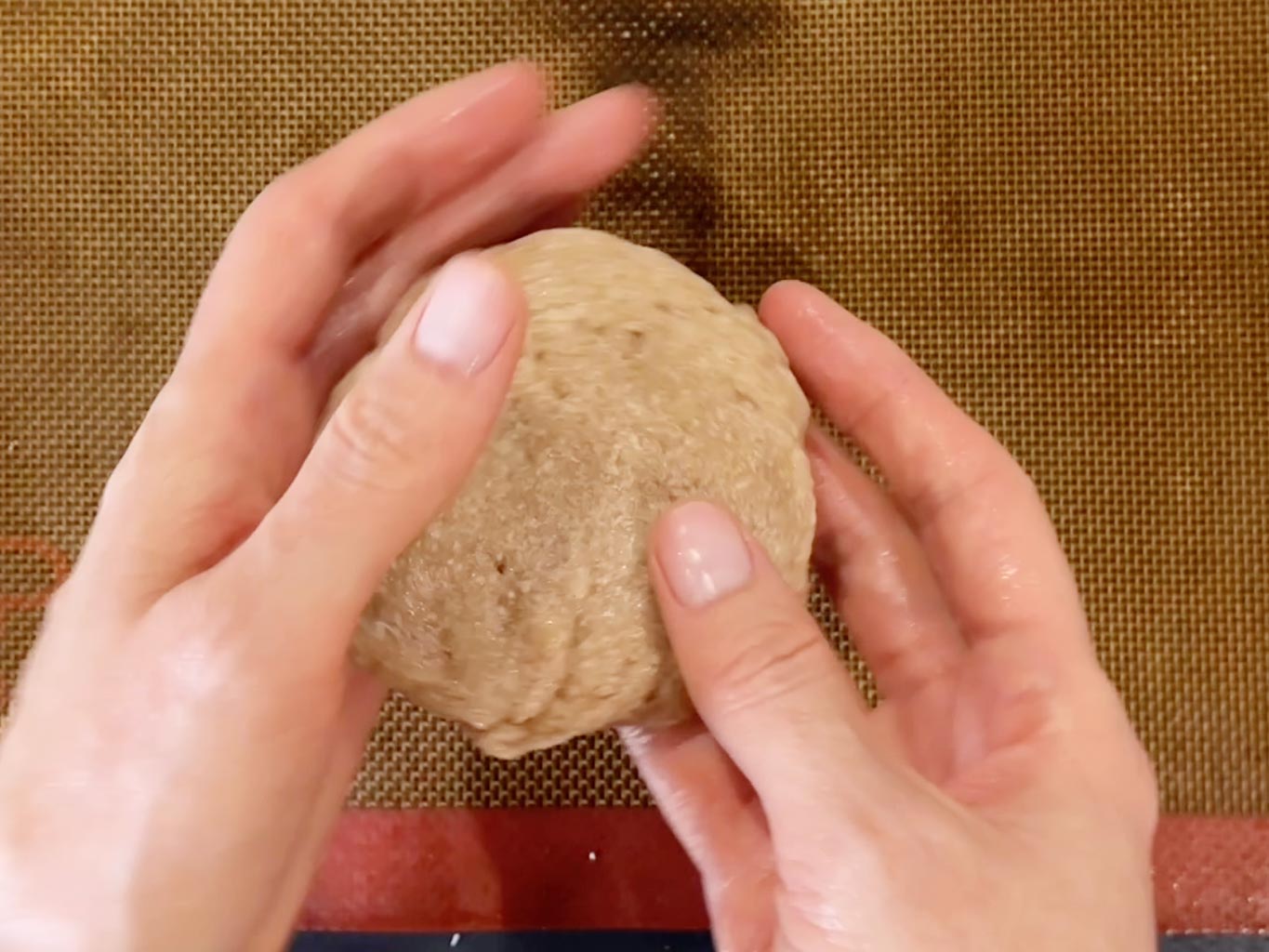
5. Shape each portion into a bun about 2 cm thick and place on a lined baking tray.
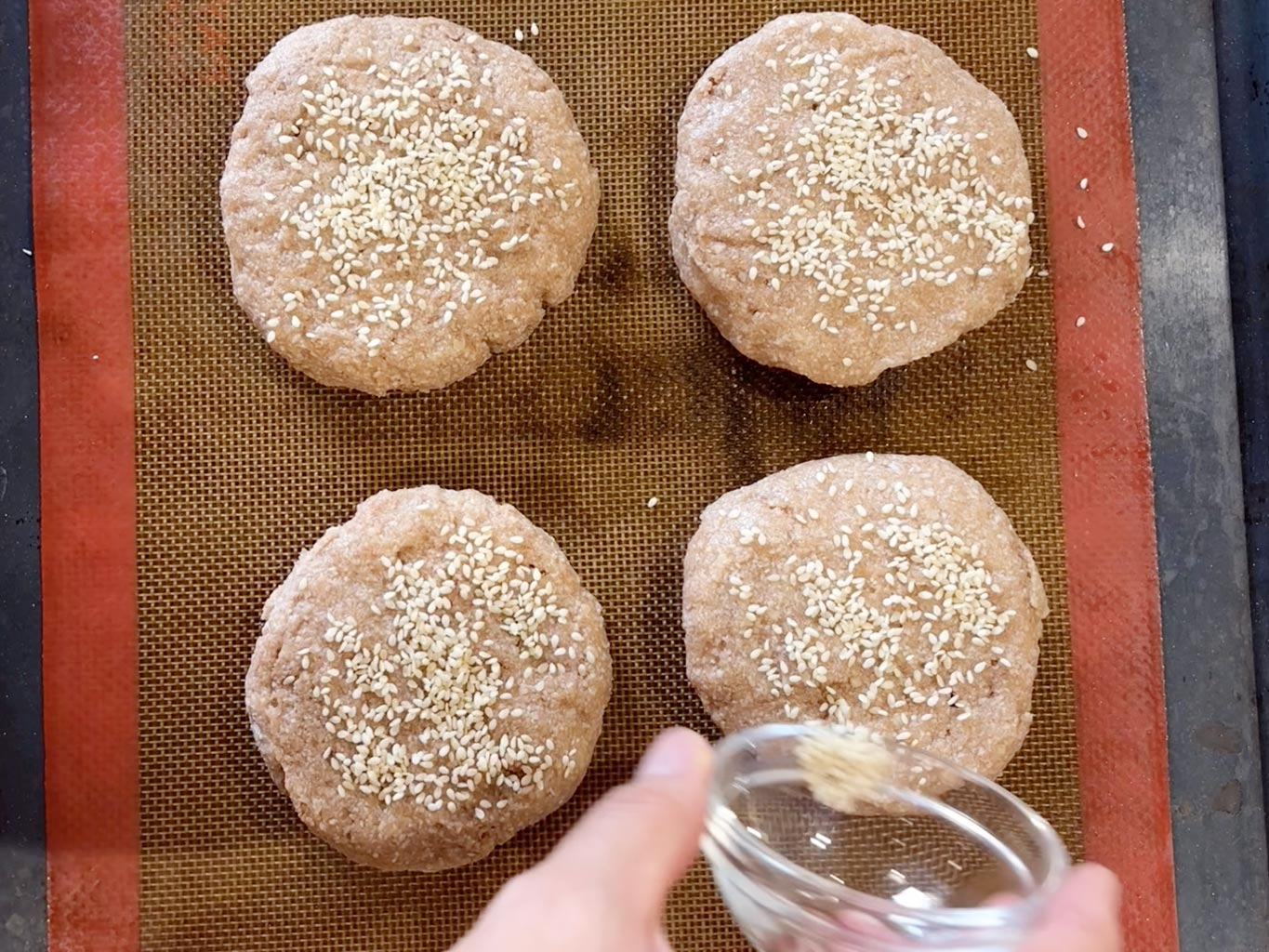
6. Add pumpkin seeds or sesame seeds if desired, pressing them in gently to help them stick.
Bake in the bottom shelf of the oven for 40 minutes.
Hint: The buns will quadruple in size and you know they are cooked when the underside is dry and feels hollow.
? Storing Your Low Carb Burger Buns
These buns store well in the fridge for up to 5 days or in the freezer for up to 6 months.
Slice before freezing and separate each slice with parchment paper. For best results, thaw in the refrigerator. Simply take a bun out of the freezer and pop it in the fridge first thing in the morning and your bun will be soft and ready to eat by lunch time!
Although it can be done, I would not recommend toasting or grilling these buns from frozen. This is because the dough is so light and airy that they very quickly dry out in a toaster.
? Serving Suggestions
As well as tasting delicious on their own, you can also use these soft buns as a bread replacement for a number of dishes such as:
- Chicken, turkey, beef or bean burger topped with some avocado or homemade guacamole
- Coronation chicken salad sandwich
- Thick soup with bread for dipping
- Speedy fried egg and spinach sandwich
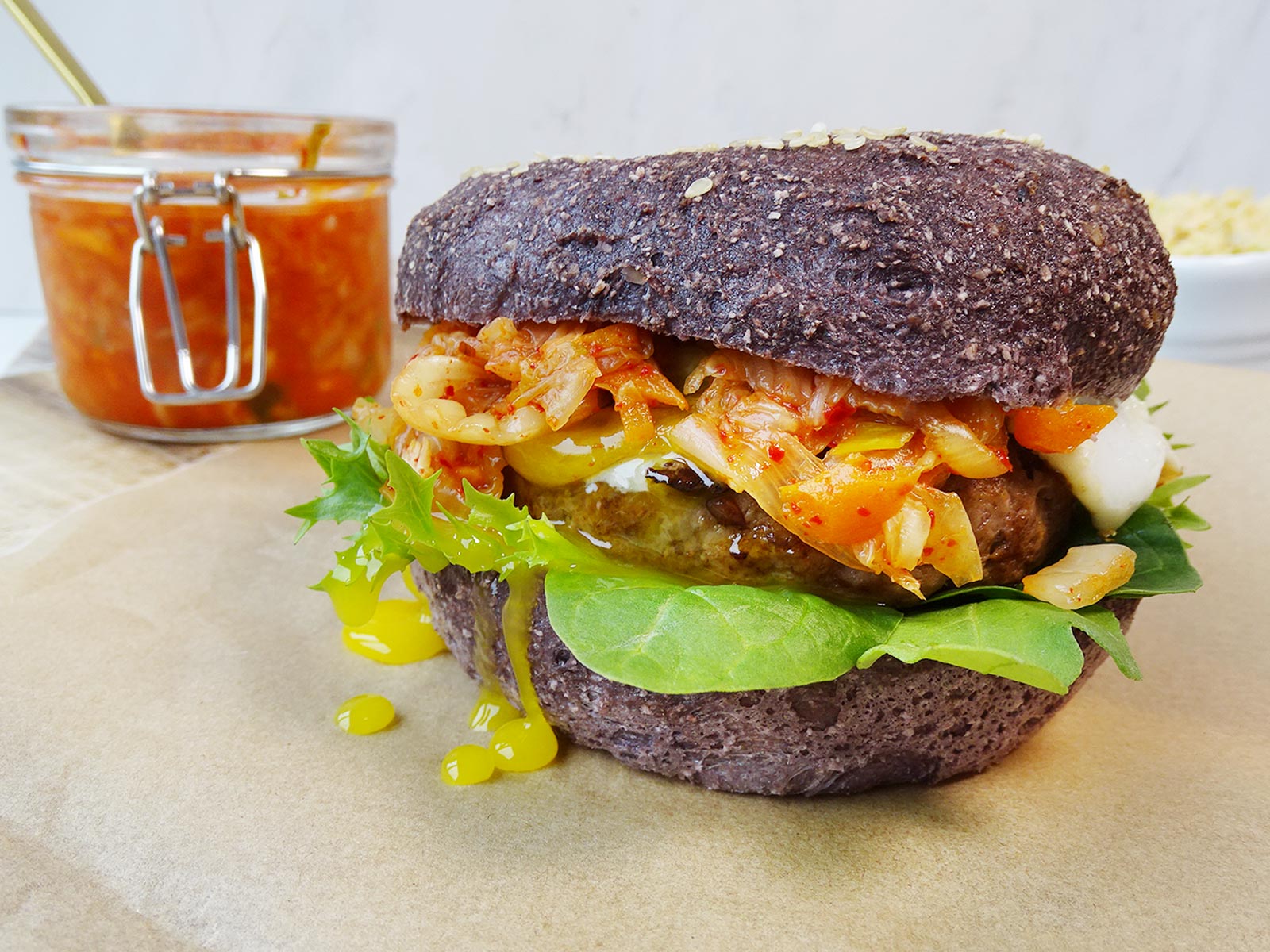
- Get an added probiotic boost with these delicious kimchi burgers
❓FAQ
Psyllium blond, or psyllium husk powder is a natural dietary fibre that comes from the psyllium plant. It's often used as a dietary supplement to improve bowel function or to relieve constipation.
One of the unusual side effects of using psyllium husk powder in baking is that it has a tendency of turning the food purple! This is down to a natural chemical reaction when cooked and is completely normal. Different brands of psyllium and different recipes may result in a different hue of purple, however, this is purely cosmetic and has no effect on the taste, texture or quality of the food. If anything, I think the deep purple gives a bit more character to your baking!
Put simply, there is no difference other than the fact that the powder is the whole husks which have been ground to a fine powder. Note that psyllium husk powder absorbs far more water than the whole husks, however, so it does matter which you use in a recipe.
1 tablespoon of psyllium husk powder, or ground psyllium husk seed, is the equivalent to 8g.
Yes, psyllium husk is gluten-free. Psyllium husk is a natural plant-based ingredient that is derived from the seeds of the Plantago ovata plant.
If you do not have psyllium husk to hand, you can experiment with substituting like for like with ground flaxseed and / or whole chia seeds, however, note that I have not recipe-tested these substitutes and the resulting flavour and texture will be impacted.
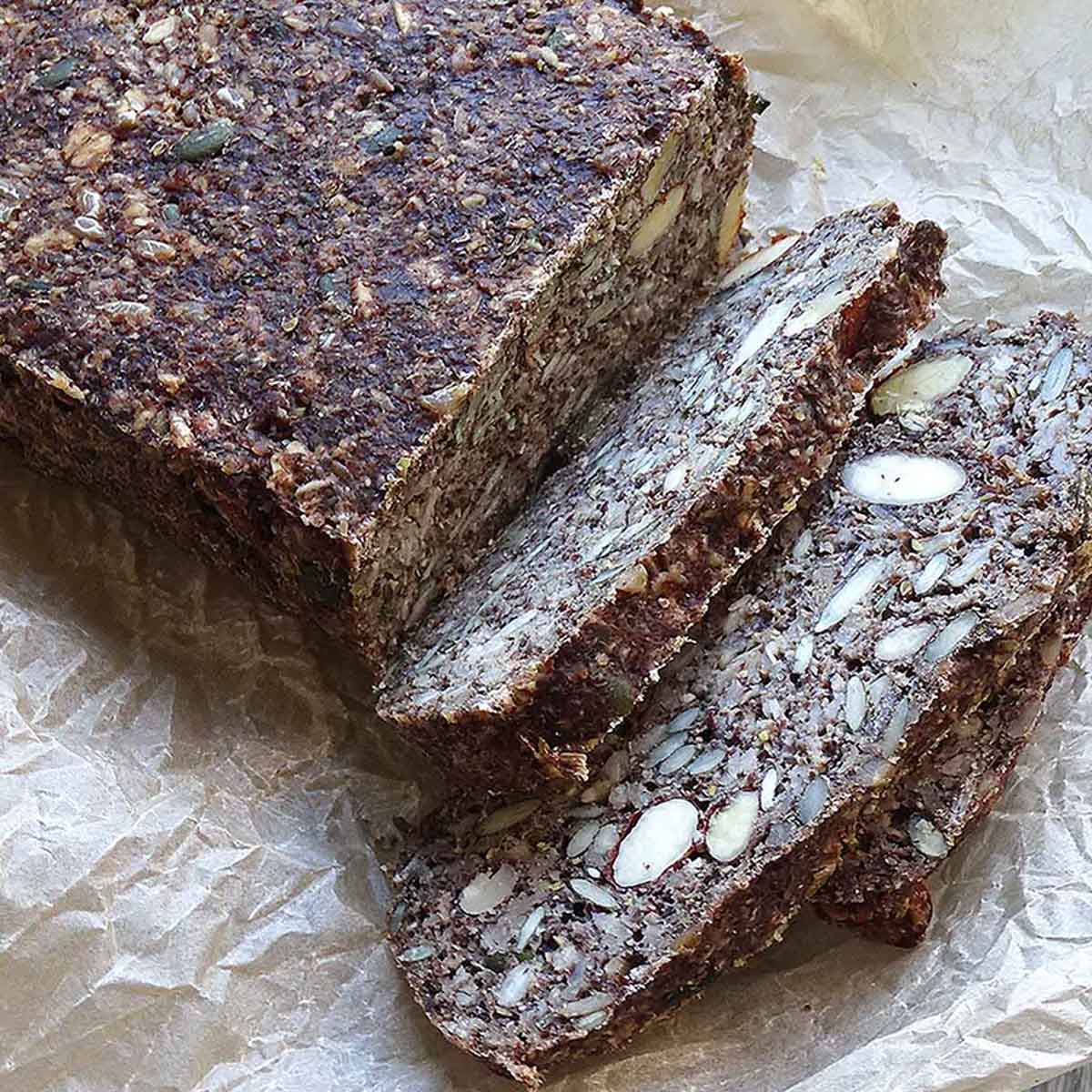
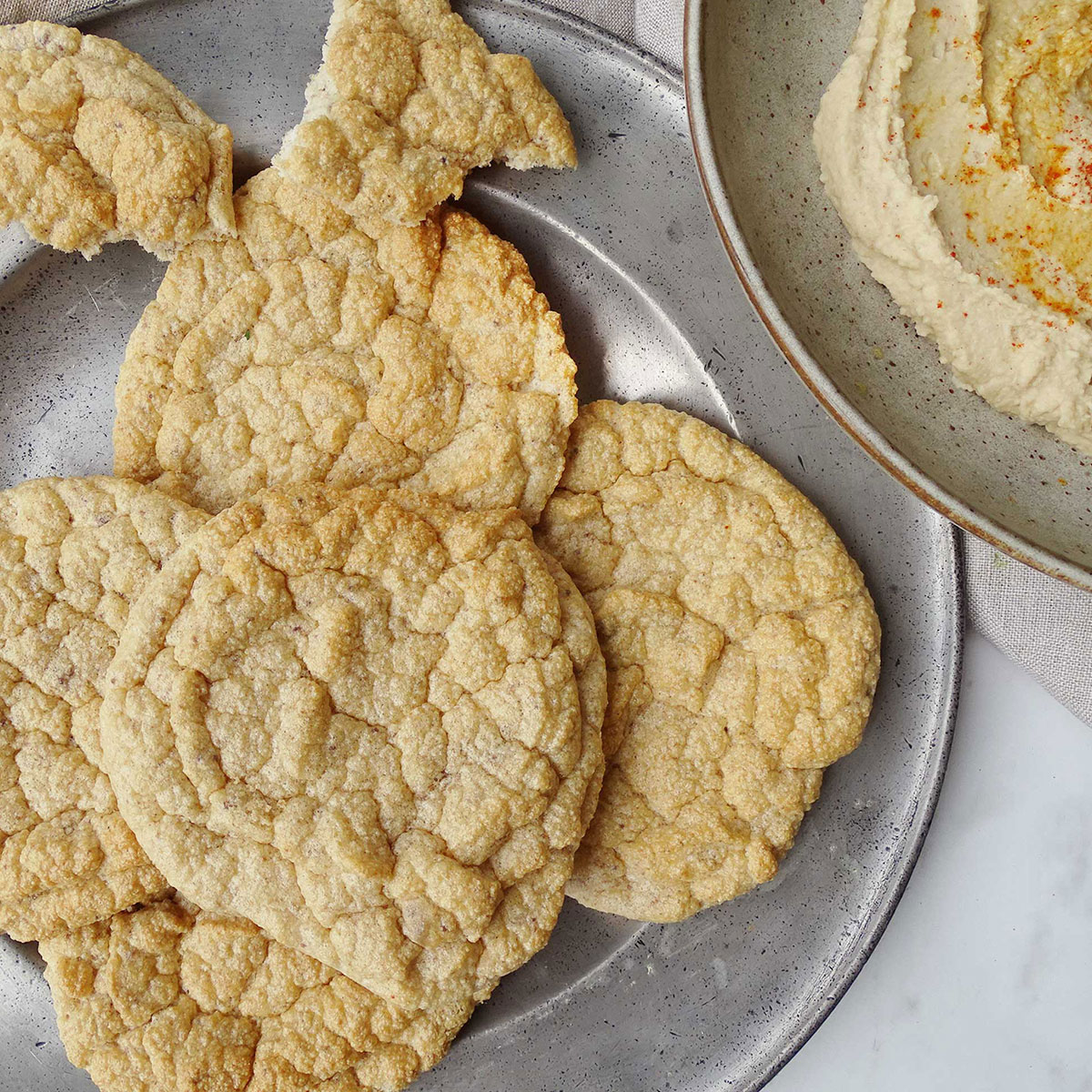
Looking for More Candida Diet Bread Recipes?


Low Carb Burger Buns Recipe (Gluten Free and Keto)
Ingredients
- 40 g almond flour
- 28 g coconut flour
- 40 g powdered psyllium husk
- 2 teaspoon baking powder
- ⅛ teaspoon salt
- 3 egg whites medium
- 2 teaspoon apple cider vinegar
- 235 ml water boiled
- 1 tablespoon pumpkin seeds optional
Instructions
- Pre-heat your oven to 175°C/347°F.
- Separate the egg whites from three eggs. Refrigerate the yolks to use in another recipe.
- Add the apple cider vinegar into the egg whites and whisk gently to combine.
- Boil enough water to measure out exactly 235ml of freshly boiled water. I recommend weighing your water instead of using a jug for preciseness. 235ml of water is equal to 235g of water.
- In a large bowl, combine the almond flour, coconut flour, powdered psyllium husk, baking powder and salt.
- With the boiling water measured and ready to use, add the egg white and vinegar mixture to the dry ingredients and mix to combine. Next, add the boiling water little by little while continuing to mix. Try not to over-mix. I like to use a rubber spatula for this as it is easy to gather all of the mixture from the sides of the bowl.
- The mixture will begin to thicken very quickly to an almost gelatinous consistency.
- Use your spatula to divide the mixture into either 4 or 6 equal portion, depending on the size of buns that you would like.
- Add each portion to a baking sheet lined with a silicone baking mat or parchment paper.
- Wet your hands with water and briefly form and flatten the dough so that it resembles patties (approx 2cm thick).
- If desired, add seeds such as pumpkin seeds to each patty, pressing the seeds in gently with your fingers to stick.
- Bake in the bottom shelf of the oven for 40 minutes. The buns will quadruple in size and you know they are cooked when the underside is dry and feels hollow.
- Leave to cool slightly before enjoying still warm (be careful of steam in the buns!). If you intend to use them for sandwiches or burger buns allow them to cool fully before slicing.
Notes
Last step! If you make this recipe, will you do me a huge favour and leave a ⭐⭐⭐⭐⭐ review letting me know what you thought? It really helps! Thanks for your support!!
Nutrition
Disclaimer: Nutritional info is approximate and for general guidance only. Unit conversions are automatically generated and may not be accurate.
alex says
how many grams of carbs are in a serving?
Carly says
Hi Alex, I quickly worked this out for you, each bun (if you make a batch of 6) contains around 9.79g carbs and 7.36g fibre = 2.43g net carbs. Plus you are getting loads of other nutrition in there as well. Hope that helps!
Daniella says
I've made these buns twice now and enjoyed them both times! They have a great flavor and are easy to make. It's hard to find clean, gluten-free, and candida friendly buns. They are a little on the airy side when you cut into them, thinking maybe I just over stirred them. Definitely my go-to bun while following the candida diet.
Carly says
Hi Daniella thanks for the review! You're right they are very airy and light which means they do NOT toast well (trust me I've tried haha), however, as a burger bun for example they are perfect as they are nice and chewy and hold together well. Glad you enjoyed the recipe ?
Laura says
Hi,thank you for this recipe, I have made the buns they turned out amazing, however they are bit bitter, do you know from what could it be? I have another recipe for candida friendly bun very similar and I feel the same bitterness in those too. Could it be from the apple cider vinegar or is it something else? 🙂
Carly says
Hi Laura! Thanks so much for trying out this recipe ? Hmmmm, I have made this recipe many times and have never tasted bitterness myself. From the ingredients list, the most likely culprits would be the baking powder (bicarbonate of soda can have a bitter taste if too much is used). Or possibly the almond flour if it is not fresh enough and the nuts are turning. Give the almond flour a taste still raw to rule this out. I would also recommend storing almond flour in the refrigerator to keep it as fresh as possible! If it is the apple cider vinegar, unfortunately you do need the vinegar to help add air to the buns, but you could experiment with reducing this ever so slightly to get a milder flavour that you like better. ?
Joanne says
These are sooo good. Thank you! I was having a hard time with the Candida diet but you made it easier.
Carly says
Hi Joanne, thank you so much for your rating, it means a lot! I am so pleased that you enjoyed these burger buns and that it made your diet just that little bit easier ?
Michelle says
Gosh, these are fantastic! I have to admit I was dubious reading the recipe, but they are perfect. Fluffy but with some chewiness to them, excellent. And mine aren't purple in the slightest! How on earth did you figure out this recipe? I'm impressed : )
Carly says
Hi Michelle, thank you so much for your kind review, I am so glad you enjoyed these buns, I also love them for a burger fix! So funny that yours didn't turn out purple, I think it can depend on the brand of psyllium husk powder. I am sure yours looked much prettier than mine 🙂 I adapted a well known keto bun recipe (see link in the first paragraph to the original source) - I wanted a way to make the recipe a little less expensive because the original recipe requires a lot of almond flour and I wanted to be able to make these regularly. I found this ratio worked perfectly to mimic the texture without adding any coconut flavour from the coconut flour. Thanks again for your message ?
Michelle says
Oh I meant to check if you're supposed to mix in the water immediately after it boils or wait til it's cooled? I used it pretty hot and it worked okay, but wasn't sure if you meant boiling water or boiled water. Thanks again, I've already eaten the first batch and planning to re-make again tomorrow!
Carly says
Hi Michelle! Wow that's a good testament to the recipe if you're making more already ? love it! It's got to be freshly boiled, I guess it may be a couple of degrees cooler once you've measured out the precise amount in a jug etc, but basically the boiling water starts off the cooking process. Bicarb is activated by liquid as well as the apple cider vinegar so the heat from the water starts to cook the egg while all those initial bubbles are made which helps to give it that lovely spongey texture without the need for gluten. ?
Linda says
I loved how light this bun is. I found slicing them is best done with a serrated bread knife as they are quite spongy. Even though they don't toast well the outer side does toast somewhat. I put just a skim of goat cheese on half of the bun and sprinkled with Everything bagel seasoning. So good!
Carly says
Hi Linda! Thanks so much for your comment! Oh yes freshly baked they have a nice crust and soft centre but I found when I put them into a toaster (from chilled) how you would regular bread, they sort of evaporate and lose the nice spongey texture, therefore best to reheat slowly for sure! Ohh Everything Bagel seasoning on top sounds delicious! ?
Angi says
Hello, thank you so much for the recipe. Do you know why it could be that when I pulled them out of the oven, they looked really great, very bun-like, but when I turned to check on them a few minutes later, some of the buns became very indented on the top? They looked almost as someone has squeezed them :/
Carly says
Hey Angi! In the oven they will puff up like little footballs full of air, but they will deflate somewhat once the steam escapes (like when you make a soufflé) although they should still be nice and spongy inside once cooled. Be sure to properly incorporate all the dry ingredients before adding the wet ingredients and do not overmix so that you don't end up with one big air bubble inside as that could mean a less bread-like texture. I hope they still tasted nice! ?
Michele says
Hi. My first go at these and the center is gummy. Baked for an hour. I feel like I followed the recipe to a T. What could I have done wrong? Thank you!
Carly says
Hi Michele - oh no! I haven't had that happen before but my guess is the gummy texture is lack of air bubbles. I'd say the most important parts of this recipe are: 1) to act quickly once you have added the wet ingredients to the dry (because the baking powder will react once you add the wet ingredients) 2) to use nearly freshly boiled water so that the dough can start to cook before it even goes in the oven (be careful handling the dough if it's too hot, start with a spatula) 3) not to over-mix/knead the dough, as again you don't want to squash out all the potential air bubbles 4) don't wait to pop them in the oven as again you don't want to lose the air bubbles by leaving them sitting on the counter. Do you think any of those points may have caused the gummy buns? Hoping you have better luck next time as these are usually super light and fluffy! 💚
Candace says
I made these yesterday and was amazed at how much they puffed up! They ended up being round balls! They definitely grow 4x in height.
However, when I cut into them they were fully hollow like choux pastry with a chewy blob on the bottom. I ate them anyways and they tasted delicious. Especially with the fresh ghee I cooked up earlier. 🍞🧈😋
I'm assuming this was due to how I stirred up the mixture. I'd appreciate more specific stirring directions if possible. I'd love to nail this and enjoy a burger or sandwich!
Any advice is appreciated. Thanks so much! 🙏💜
Carly says
Hi Candace, thanks for your message and so glad you enjoyed the flavour! This has happened to me before as well where there ended up being a big hollow bubble which is so frustrating! If you imagine where the air is coming from I find that helps - so it's the egg whites and the baking powder/vinegar mix that helps create the air bubbles. The baking powder will start to bubble as soon as you add the liquid, and the hot water also helps to start the cooking process. So with this in mind, you want to work quickly to mix the dough together but also not over-mix and squash out all the air bubbles. Also, make sure your oven is already pre-heated so that they can go in right away once shaped. I hope they come out a bit more even for you next time! 💚